
How to Search the Many Court Docket
Many offers two record paths. A city citation or ordinance question goes to the Town of Many Mayor's Court contact. The official city page confirms a Mayor's Court at City Hall, but it publishes no docket search, no case-number format, and no case-by-case calendar. A district civil, criminal, succession, probate, or covered traffic record runs through the Sabine Parish Clerk's Cott eSearch route instead. A direct call to the clerk works too. Let the court named on the paper decide your first search, not the place where the event happened.
Gather the citation or case number, the exact name, the rough filing year, and the venue. A bare Many result answers nothing. A municipal notice lives at City Hall. An 11th Judicial District Court of Louisiana matter belongs with the Sabine Parish Clerk of Court. The annual parish calendar lists general session types only. It is not a live Many case list.
- Read the citation, summons, or prior order for the court named on it.
- For a Many municipal matter, call City Hall or the Mayor's Court contact to ask for the current records procedure.
- For a district record, open the clerk's Cott subscription route and use the information available after login.
- Keep the case number and ask whether a later setting or reset appears in the clerk's record.
- Request a copy or date confirmation from the office that actually holds the Many file.
Many Court Docket Venue Split
The two Many locations answer different questions. Many's Mayor's Court information puts municipal proceedings at City Hall, 965 San Antonio Avenue. The Sabine Parish Courthouse sits at 400 South Capitol Street. The clerk works in Room 102. The district court office is in Suite 204. Do not mail a municipal ordinance file request to the district clerk just because both addresses share a zip code.
The reverse holds too. A district case arising in Many never becomes a City Hall docket. The 11th Judicial District Court holds original civil and criminal jurisdiction in Sabine Parish, and the parish clerk keeps its record set as legal custodian. This split matters most when the paper names a justice of the peace, a Mayor's Court, or the district court.
The Many Municipal Court
Mayor's Court is Many's municipal forum. Louisiana materials describe Mayor's Courts as handling municipal-ordinance violations. They cannot replace the 11th Judicial District Court of Louisiana, and a state-law traffic charge or broader criminal case follows the venue printed on the citation. Many Mayor's Court records stay local. They are not automatically folded into the Sabine Cott district-court collection.
The Town of Many administration page identifies City Hall and its municipal functions. The Louisiana Municipal Association profile lists Many as an incorporated town with Mayor's Court. Neither page works as a public case register. Ask the city which official holds the requested Many record, whether inspection or a written request fits, and what copy method exists.
City Hall remains a smart first stop. It confirms a municipal matter before you try the parish system, and it keeps a Many city citation from being mistaken for an 11th JDC case.
Many Court Docket Second Monday
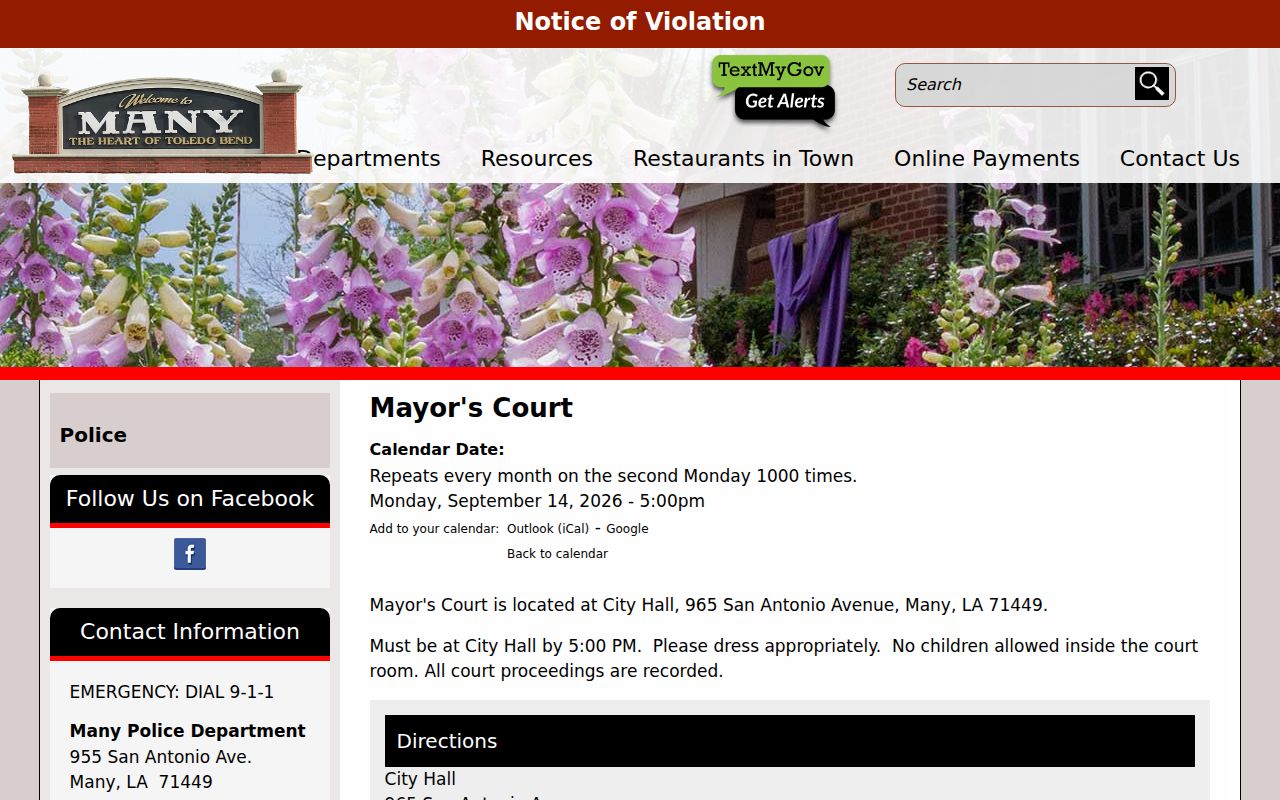
Many's official Mayor's Court page describes a recurring second-Monday court pattern. It requires participants to be present by 5:00 p.m. Proceedings are recorded, the page says, and children are not permitted. Those facts sketch the local municipal process. They do not mean every Many case lands on that date, that a given citation keeps the same setting, or that the court posts a web calendar.
The date on a citation, summons, later order, or current case record always controls. A recurring pattern does not override it. Call City Hall at 318-256-3651 before appearing for a Many municipal case. District-court questions go instead to the 11th JDC at 318-256-9789. That short call separates a general municipal meeting schedule from a live Many court docket setting.
The Town of Many Mayor's Court page publishes the municipal pattern.
Phone and citation remain the reliable routes. The municipal information offers no public online Many docket register to lean on.
Many Court Dates and Settings
The clerk's annual public calendar helps here. For a Many district case, it shows recurring labels such as arraignment, criminal motions, plea status, civil rules, or fines and costs. Treat it as a planning calendar. It is not a case search. The public PDF displays no party name, case number, courtroom, or attorney field. Learn the session type from it. Then ask the clerk or court office about the specific Many case.
For a Mayor's Court matter, the official city instructions and the citation come first. The city publishes no municipal setting table or case-number convention. Confirm any reset, continuance, or payment question directly with the municipal office.
| Date | Use the date on the Many citation, order, or later minute entry; a recurring city pattern is not a personal setting. |
|---|---|
| Time | The Mayor's Court page says to arrive by 5:00 p.m.; district calendar times are general session blocks. |
| Location | Confirm City Hall for a Many municipal matter or the South Capitol courthouse office for a district matter. |
| Court | The citation should identify Mayor's Court, a justice court, or the 11th Judicial District Court of Louisiana. |
| Setting type | Read the notice or case record; the official sources do not publish a Many municipal docket-field list. |
Many Court Docket Payment Boundary
Many points citation holders to QuickCourt for Many. It is a payment channel the city supplies. Nothing on it functions as a public docket. It is not a case-history search, and it does not hand out record copies. Paying a municipal citation is one thing. Reading the filings, dates, and outcomes in a docket is another.
Follow the city's payment instructions exactly. Keep the response directions printed on the citation too. If you need to know whether a Many case is set for a hearing, has moved, was filed in district court, or can be copied and certified, ask the clerk who holds that record. Sabine Parish sets no parish-wide traffic deadline, continuance form, or uniform municipal copy-fee table. The city-linked QuickCourt page is Many's published payment route, and the official page shows just that: a way to pay, not a register of cases.
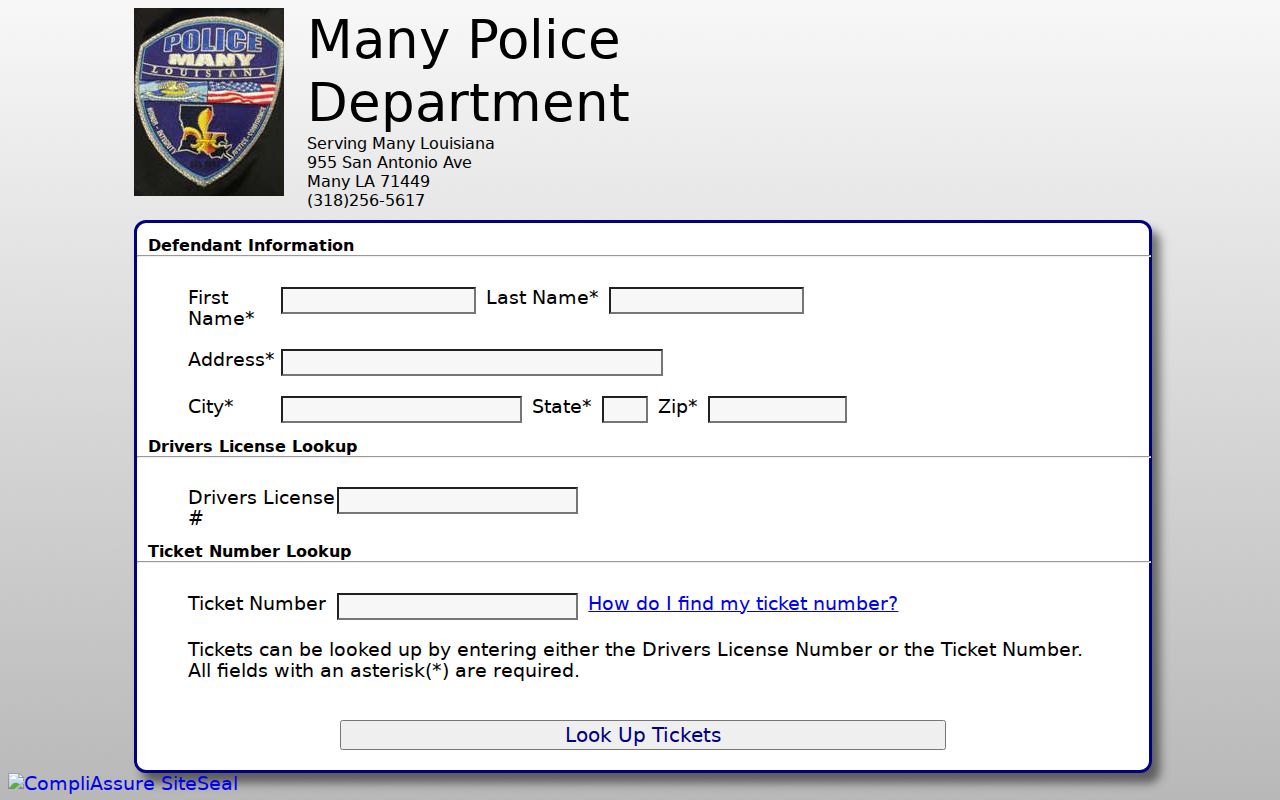
The page shows why the Many payment channel is not a municipal docket register.
Many Traffic Tickets
Read a Many traffic or ordinance citation before you search anything online. Venue comes first. The city page, City Hall, and Many Police can route a municipal question. Many Police answers at 318-256-5617. A notice that names a justice of the peace is different. It belongs to that district instead, and any district-court record should go through the Sabine Clerk. One more wrinkle matters here. The state criminal minute-entry rule excludes traffic violations from its statutory transmission.
The clerk's Cott eSearch covers district-court traffic files. It lists Criminal/Traffic indices and images dating from July 1, 1990. A missing Cott result can mean several things. The citation may sit in a local lower court. It may fall outside the coverage path, or not be available yet, or simply belong to a different venue. The county-wide distinctions are laid out in Sabine Parish traffic court records.
Many Court Docket Cott Route
As the parish seat, Many is also where Sabine Parish district records live in practice. The clerk's Online Access page points searchers to Cott eSearch. Coverage there runs deep. Civil indices start in 1985, civil images in 1998, succession and probate indices in 1920, and criminal and traffic indices with images on July 1, 1990. The public login hides the full field vocabulary behind the paywall. No field list is public. No one can promise which name or citation fields a Many docket search will offer inside the system.
Access costs money. The clerk sells 24-hour, monthly, three-month, and annual subscriptions. Cott is not the same product as eClerks LA. That service adds a statewide layer on top. eClerks LA's description of the statewide portal explains that wider route, though the Sabine Parish Clerk still keeps the local file for any Many district record.
Want broader background on how the state system grew? The portal's history and access explanation lays out what the statewide service covers and how it fits with parish clerks.
Cott and the Many clerk stay separate, though the statewide layer can help point you to a record.
Where Many Cases End Up
Venue decides where a Many record lives. Residence does not. A municipal ordinance matter may stay with Many Mayor's Court. A qualifying lower-court matter may land in a justice-of-the-peace district. Everything heavier routes elsewhere. Felonies, general civil cases, successions, probate matters, and lower-court appeals all go to the 11th Judicial District Court of Louisiana and the Sabine Parish Clerk of Court in Many. Appeals from that district court climb one more step. They reach the Louisiana Court of Appeal, Third Circuit.
Docket flow: Many Mayor's Court › Sabine lower courts or district records › 11th Judicial District Court of Louisiana
That flow tells you which office owns the record. For a broader map of every parish pathway, see the Sabine Parish court docket overview. Remember its limits, though. It cannot turn city records into district records, and it cannot make Cott a guaranteed Many municipal database.
Many Court Docket City Hall Route
The Town of Many's administration information helps with local contact planning. It is not a request form. It is not a case index either. Call City Hall. Ask plainly whether the Many municipal docket, citation record, or copy you want is held there. Get the current records custodian's name, the cost, the delivery method, and whether a written request is required. The city publishes no municipal copy-fee schedule, no public terminal statement, and no public docket portal. The Many administration source marks the municipal side of this route. The official page shows the town's administrative contacts.
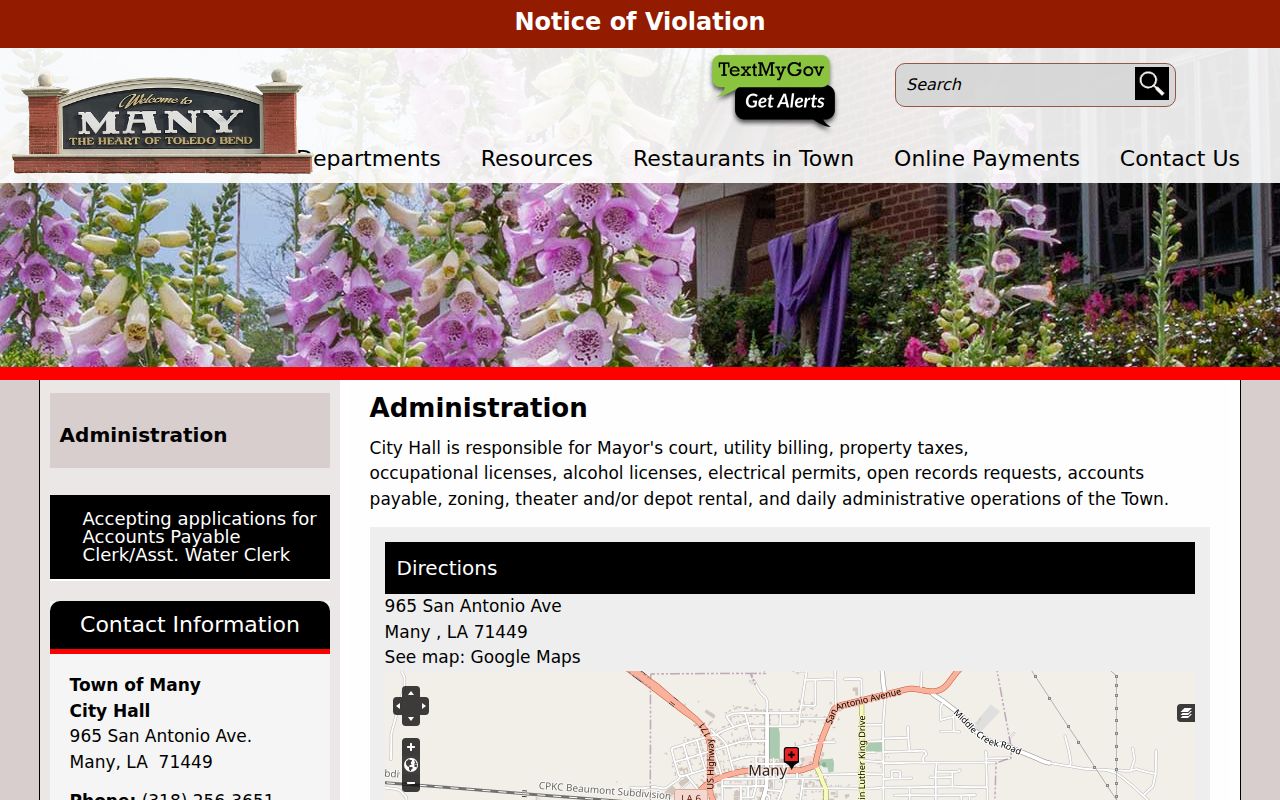
The municipal contact information helps separate a Many City Hall request from a clerk request at the parish courthouse. That distinction saves time.
Many Court Docket Parish Seat Context
Many counted 2,571 residents in the 2020 Census place table. It also serves as the Sabine parish seat. The town incorporated in 1843. Its parish-seat role explains why City Hall and the district courthouse both sit in Many. It does not merge the two dockets. Municipal and district systems keep different responsibilities and different access methods.
So let the court name on the document lead the way. A Many ordinance question starts with Many municipal contact. A Many district case starts with the Many courthouse record route. A citation naming another court should leave the Many municipal path entirely. These venue checks tie the docket search to the custodian. They also keep a Many calendar question separate from a Many payment question. A Many record-copy request stays separate too. The Louisiana Municipal Association Many profile records the town's municipal profile and Mayor's Court function. The official page documents both.
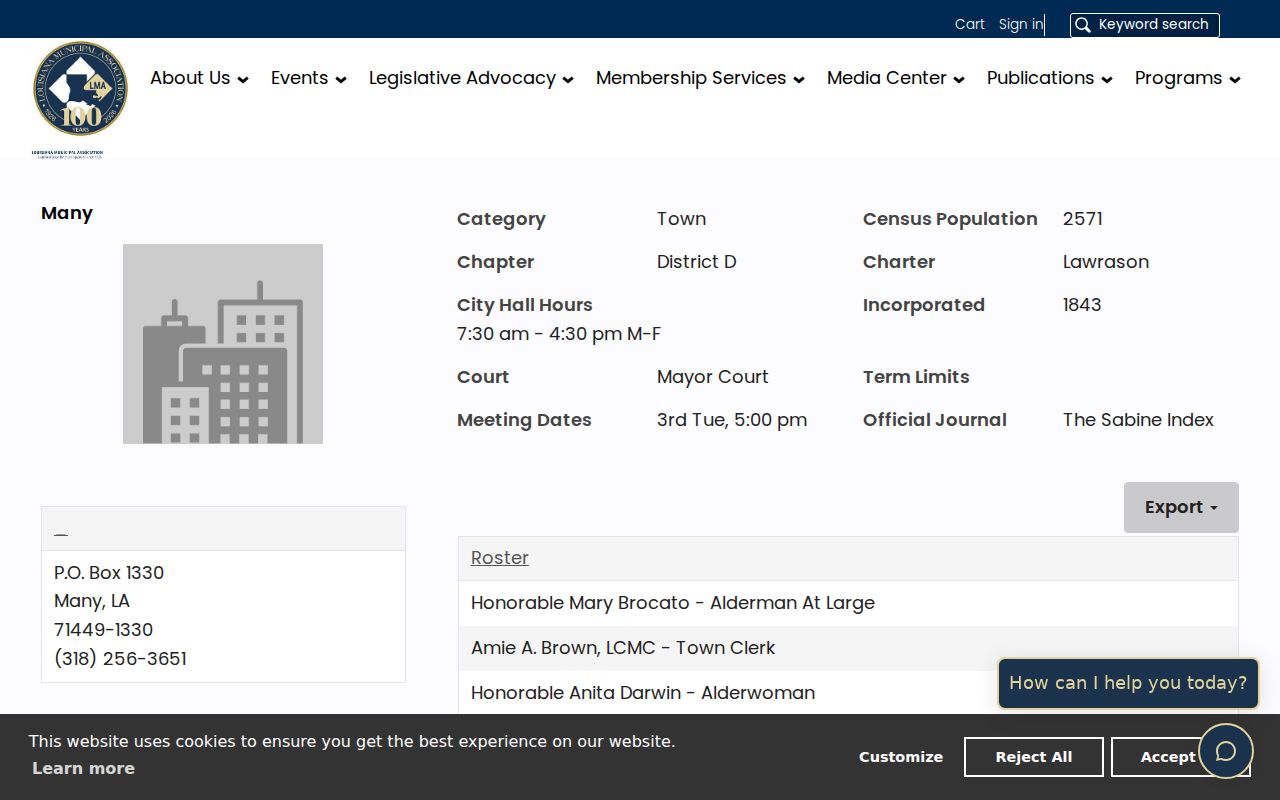
The profile offers city context, yet the citation and records custodian still set your Many docket path.
Public Access to Many Court Records
Who holds the record decides who you ask. In Many, district court files live with the Sabine Parish Clerk. The clerk offers inspection, copies, minute entries, and certified copies as law allows. A Mayor's Court file is different; confirm the municipal custodian before you send a request. Know what product you want, too. A docket, a filed document, and a certified copy are not the same thing. Neither is a payment made to the municipality. That payment is not a public record copy.
Some material stays off limits or gets redacted. Juvenile cases, sealed files, expungements, adoptions, and other protected records fall in that group. When you file a public request, name the case and the date range. Say what you want, too. Then ask the office whether a nonexempt portion can be separated out for you.
Key Rules:
La. R.S. 44:32 permits examination of public records during regular hours and allows reasonable reproduction procedures.
La. Code Civ. Proc. art. 251 makes the clerk the legal custodian of district-court records and authorizes certified copies.
Children's Code art. 412 places important limits on access to juvenile records.